

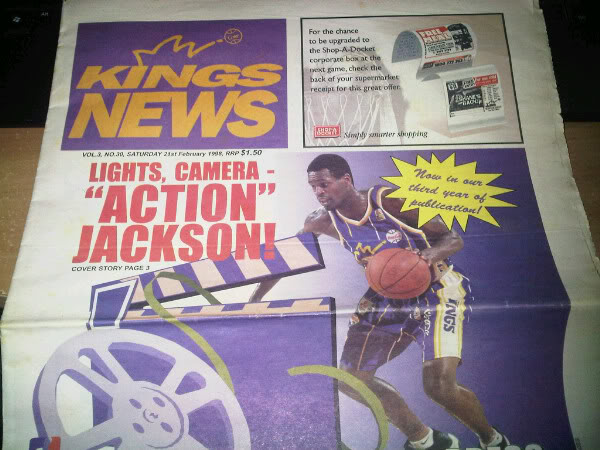
Over the years, Aussie Hoopla has taken a deep dive into the full list of players who have competed in both the NBL and the NBA.
You can see the full list of NBL players who have played in the NBA here:
Names from every decade since the 1980s have featured, including NBL legends like Andrew Gaze, Shane Heal, Lanard Copeland and Rob Rose, alongside a long list of imports who used the NBL as a stepping stone to the world’s biggest stage.
But with over 200 players having played in both leagues, the bigger question becomes, who were the greatest NBA players to compete in the NBL.
So here is a list of the top 20 careers that NBL players carved out in the NBA. While few were All-Stars or NBA champions, many of these players each had moments of real impact at basketball’s highest level.
20. Rick Brunson
Brunson’s road to the NBA started in Adelaide. On Draft night 1995, Brunson was not selected by any NBA team despite an impressive college career at Temple, where he played in four straight NCAA Tournaments and finished fifth in the school’s all-time assists.
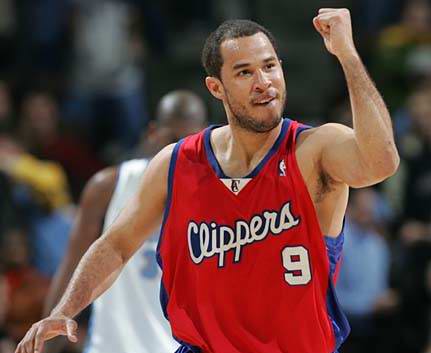
To begin his professional career, Brunson headed overseas and was quickly recruited by Mike Dunlap and the Adelaide 36ers. It was there he combined with fellow import Leon Trimmingham, helping Adelaide reach the NBL semi-finals while averaging 21.6 points, 6.5 assists, 2.5 steals and 1.7 rebounds across 31 games.
Brunson’s time in Adelaide proved to be a “one and done” NBL stint, as his focus remained firmly on reaching the NBA. In 1997, he signed with the Portland Trail Blazers as a free agent and went on to carve out a nine-season NBA career across seven different teams.
To begin his professional career, Brunson headed overseas and was quickly recruited by Mike Dunlap and the Adelaide 36ers. It was there he combined with fellow import Leon Trimmingham, helping Adelaide reach the NBL semi-finals while averaging 21.6 points, 6.5 assists, 2.5 steals and 1.7 rebounds across 31 games.
Brunson’s time in Adelaide proved to be a “one and done” NBL stint, as his focus remained firmly on reaching the NBA. In 1997, he signed with the Portland Trail Blazers as a free agent and went on to carve out a nine-season NBA career across seven different teams.
Across 337 NBA games, Brunson averaged 3.2 points and 1.3 assists while shooting 36 percent from three-point range. His best individual NBA season came with the LA Clippers in 2004–05, when he averaged a career-high 5.5 points per game.
Brunson later became better known to a new generation of basketball fans as the father of Jalen Brunson, who developed into an NBA All-Star and one of the league’s premier guards. That father-son connection gives Rick Brunson’s story a unique place in the NBL-to-NBA pathway, linking his short but productive Adelaide stint to one of today’s biggest NBA names.
Brunson’s NBA highlights include;
- A 19-point haul against the Lakers in 1998
- A breakout season with the LA Clippers in 2005 in which he averaged a career-high 5.5 points
- A member of the 1999 Knicks squad who lost to the San Antonio Spurs in the NBA Finals, a team which featured Aussie Andrew Gaze on the roster.
Career Statistics
| M | FG% | 3P% | FT% | REB | AST | STL | BLK | TO | PPG | |
|---|---|---|---|---|---|---|---|---|---|---|
| NBL | 31 | 42 | 33 | 71 | 1.7 | 6.5 | 2.5 | 0.1 | 4.4 | 21.6 |
| NBA | 337 | 38 | 36 | 69 | 0.3 | 1.3 | 2.6 | 0.1 | 1.1 | 3.2 |
19. Jonny Flynn
Flynn’s NBA peak came early, but it was strong enough to earn him a place among the most notable NBL-to-NBA names. No guard with NBL experience had produced a rookie NBA season quite like Flynn, who was selected sixth overall in the 2009 NBA Draft by the Minnesota Timberwolves.
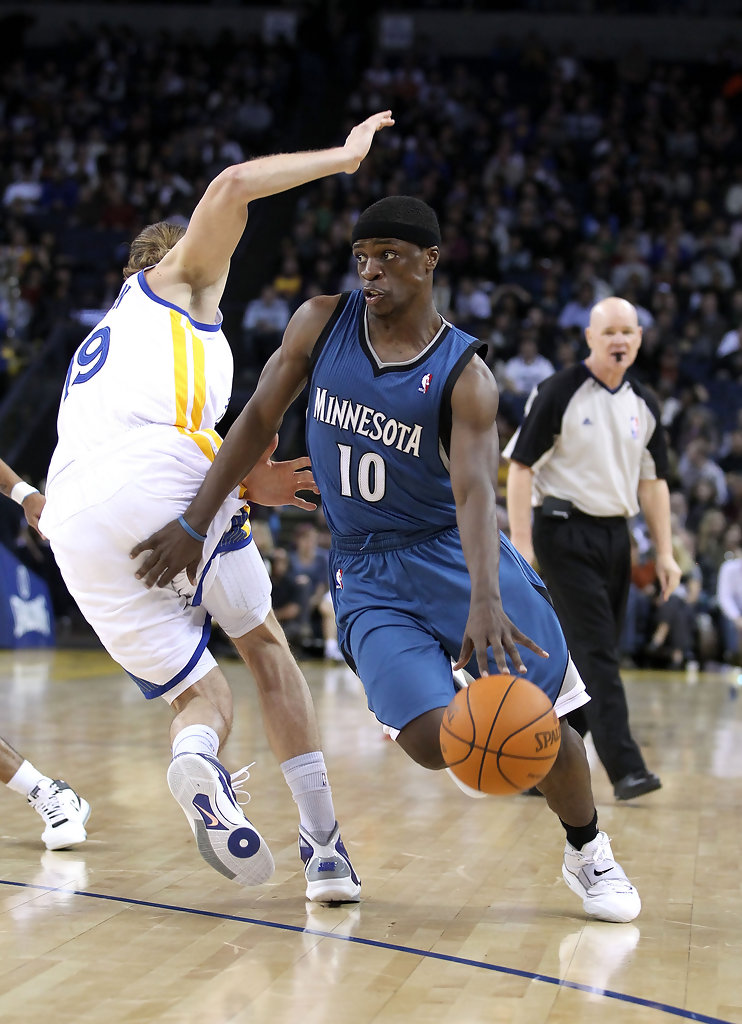
In his first NBA game, Flynn was named as a starter and showed he belonged immediately, scoring 18 points against the New Jersey Nets. As a rookie, he averaged 13.5 points, 4.4 assists and 2.4 rebounds across 81 games and was named to the NBA All-Rookie Second Team.
After that promising first season, Flynn underwent hip surgery and never fully returned to the same form. His production dropped sharply, and across the remainder of his NBA career he averaged 5.3 points and 3.4 assists per game.
In October 2012, Flynn was signed by the Detroit Pistons but lasted only 21 days on their roster before being cut, leaving him without an NBA team for the first time.
Flynn then headed overseas to prove he still had a lot of basketball left. The short NBL season made Australia an ideal landing spot, and he joined the Melbourne Tigers at a time when the club was sitting near the bottom of the ladder.
His arrival changed Melbourne’s season. Flynn helped drag the Tigers from the foot of the standings into a top-four finish and was named to the NBL All-Star Game while averaging 17.4 points, 5.9 assists and 3.9 rebounds across 18 games.
Despite that strong NBL stint, Flynn was never able to earn another NBA contract. He later continued his career overseas, including stops in China and Italy.
Flynn’s NBA highlights include;
- A game-winning layup to beat Utah 110-108 during his rookie season, finishing with 28 points
- Being named to the NBA All-Rookie Second Team in 2010
- A rookie season where he averaged 13.5 points and 4.4 assists across 81 games
Career Statistics
| M | FG% | 3P% | FT% | REB | AST | STL | BLK | TO | PPG | |
|---|---|---|---|---|---|---|---|---|---|---|
| NBL | 18 | 40 | 30 | 79 | 3.9 | 5.9 | 0.7 | 0.4 | 4.1 | 17.4 |
| NBA | 163 | 40 | 34 | 81 | 0.3 | 1.6 | 1.9 | 0 | 2.3 | 9.2 |
18. Doug Overton
Overton’s path to the NBA ran straight through one of the most dominant single-season performances ever seen in the NBL.
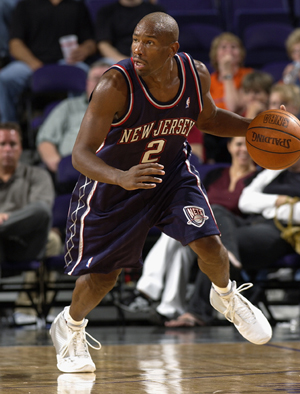
In 1992, the Illawarra Hawks were still searching for a second import late into the pre-season when coach Dave Lindstrom turned to Overton, a recent Detroit Pistons draft pick who had been told he wasn’t quite ready for the NBA.
Overton wasted no time proving otherwise. In his lone NBL season, he averaged 24.3 points, 6.2 assists, 5.0 rebounds and 1.6 steals across 26 games, leading Illawarra to the playoffs and earning All-NBL First Team honours.
His impact was immediate and memorable, highlighted by a dominant 33-point, 8-rebound, 6-assist, 7-steal performance against the North Melbourne Giants in a 113–95 win. Performances like that cemented his reputation as one of the most talented one-season imports in league history.
Following his standout year in Australia, Overton returned to the United States and began an 11-season NBA career, playing across eight teams including the Washington Bullets, Denver Nuggets, Philadelphia 76ers, Orlando Magic, New Jersey Nets, Boston Celtics, Charlotte Hornets and Los Angeles Clippers.
Across 499 NBA games, Overton averaged 4.5 points and 2.1 assists, carving out a long career as a reliable guard and role player.
Overton’s NBA highlights include;
- 21 points, 12 assists and 3 steals in his fourth NBA game as a rookie
- 20 points and 10 assists going head-to-head with John Stockton
- A career-high 30 points and 6 steals against Orlando in 1995
- 17 points and 11 assists in his final game with New Jersey in 2001
Career Statistics
| M | FG% | 3P% | FT% | REB | AST | STL | BLK | TO | PPG | |
|---|---|---|---|---|---|---|---|---|---|---|
| NBL | 26 | 49 | 38 | 82 | 5.0 | 6.2 | 1.6 | 0.1 | 3.9 | 24.3 |
| NBA | 499 | 41 | 32 | 82 | 1.3 | 2.1 | 0.8 | 0.4 | 1.2 | 4.5 |
17. Aron Baynes
Aron Baynes’ NBA career started quietly in San Antonio, but within 18 months he was standing on the NBA’s biggest stage as a champion. After years developing in Europe, Baynes signed with the San Antonio Spurs in January 2013 and spent his rookie season learning behind Tim Duncan, Tiago Splitter, Boris Diaw and one of the deepest frontcourts in the league.
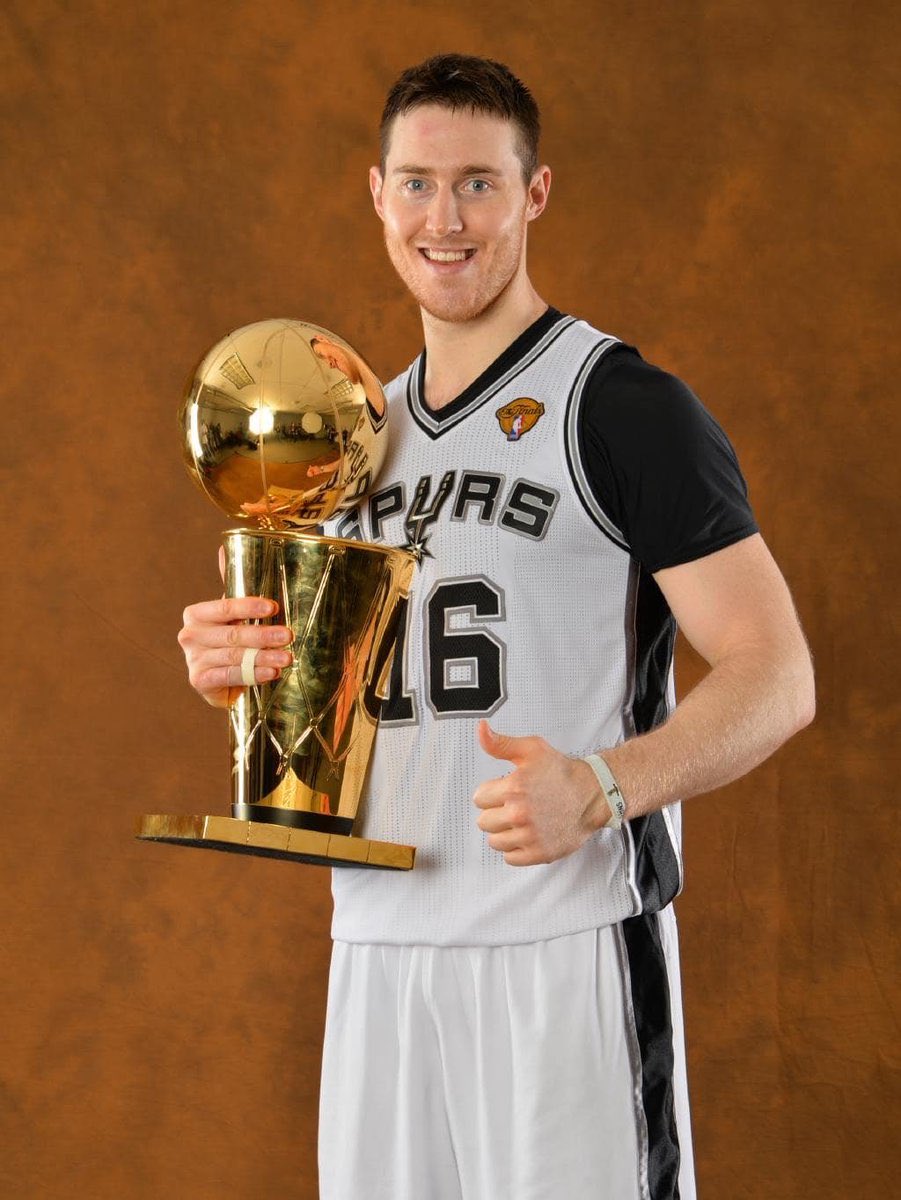
Baynes’ first major NBA moment came during the 2013 playoffs, when he started Game 4 of San Antonio’s first-round series against the Los Angeles Lakers and was tasked with defending Dwight Howard. The Spurs swept the series and advanced to the NBA Finals, where they lost to Miami in seven games.
A year later, Baynes was part of the Spurs team that got its revenge. Playing alongside Tim Duncan, Tony Parker, Manu Ginobili, Kawhi Leonard and fellow Australian Patty Mills, Baynes won the 2014 NBA championship as San Antonio defeated Miami 4–1 in the Finals.
Baynes went on to carve out a nine-season NBA career across San Antonio, Detroit, Boston, Phoenix and Toronto. His role expanded after leaving the Spurs, first as Andre Drummond’s backup in Detroit, then as a physical starting centre for a Boston Celtics team that reached the 2018 Eastern Conference Finals.
His best individual NBA moments came late in his career. In Boston’s final regular season game of 2017–18, Baynes led a short-handed Celtics lineup with a career-high 26 points and 14 rebounds in a win over Brooklyn. The following season in Phoenix, he produced one of the greatest games ever by an Australian in the NBA, exploding for 37 points, 16 rebounds and nine three-pointers in a 127–117 win over Portland.
Baynes also had a monster all-round game for Phoenix against Golden State in October 2019, finishing with 24 points, 12 rebounds, seven assists and three blocks. That season, with Deandre Ayton suspended early, Baynes became a key starter for the Suns and averaged a career-best 11.5 points per game while shooting 35 percent from three.
After his NBA run ended with Toronto in 2021, Baynes suffered a career-threatening spinal cord injury during the Tokyo Olympics. His comeback eventually brought him to the NBL, signing with the Brisbane Bullets in 2022 at 35 years of age. He scored 14 points in his NBL debut and later delivered 17 points and 14 rebounds in Brisbane’s first win of the season against Illawarra.
Baynes played two seasons with the Bullets, averaging 9.6 points and 6.0 rebounds across 47 NBL games. His time in Brisbane never reached the team success many hoped for, but it completed one of the more unusual NBL-to-NBA-to-NBL arcs on this list. A former NBA champion, Boomers bronze medallist and one of the toughest Australian big men of his era, Baynes announced his retirement from professional basketball in October 2024.
Baynes’ NBA highlights include;
- Winning the 2014 NBA championship with the San Antonio Spurs
- A career-high 37 points, 16 rebounds and nine three-pointers for Phoenix against Portland in 2020
- 24 points, 12 rebounds, seven assists and three blocks for Phoenix against Golden State in 2019
- A career-best 26 points and 14 rebounds for Boston against Brooklyn in 2018
- Starting 67 games for the Boston Celtics during the 2017–18 season, helping them reach the Eastern Conference Finals
Career Statistics
| M | FG% | 3P% | FT% | REB | AST | STL | BLK | TO | PPG | |
|---|---|---|---|---|---|---|---|---|---|---|
| NBL | 47 | 46 | 35 | 72 | 6.0 | 0.8 | 0.2 | 0.4 | 1.6 | 9.6 |
| NBA | 522 | 49 | 31 | 79 | 4.6 | 0.8 | 0.2 | 0.5 | 0.9 | 6.0 |
16. Tyler Johnson
Tyler Johnson’s NBA career began the hard way, going undrafted in 2014 before forcing his way into the Miami Heat rotation through the G League and a pair of 10-day contracts. He made his NBA debut with Miami in January 2015 and quickly became one of the Heat’s better development stories, turning himself from an undrafted guard into a genuine rotation piece.
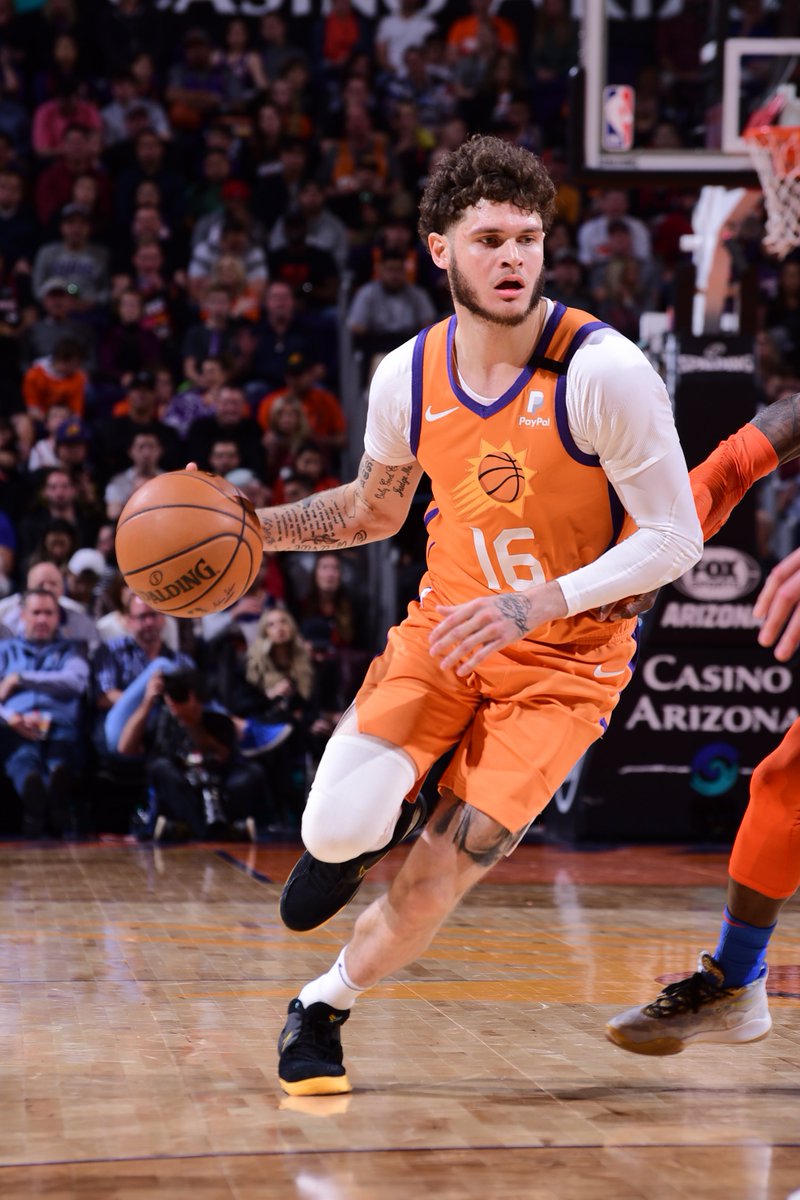
Johnson’s best NBA stretch came in Miami, where he became a high-energy combo guard capable of scoring in bunches, defending both guard spots and changing games off the bench. His most productive season came in 2016–17, when he averaged 13.7 points, 4.0 rebounds and 3.2 assists across 73 games for the Heat.
His rise also came with one of the more unusual contract stories of that era. In 2016, Brooklyn offered Johnson a four-year, $50 million deal as a restricted free agent, which Miami matched, turning him into one of the NBA’s most expensive undrafted success stories.
Johnson’s best individual NBA performance came in December 2017, when he scored a career-high 32 points for Miami against Orlando. He also produced several strong games in a Heat uniform, including a 26-point, four-steal performance against Phoenix early in his career and a 24-point game against Sacramento where he played 44 minutes off the bench.
In February 2019, Johnson was traded to the Phoenix Suns, where he moved into a larger role and later crossed paths with Aron Baynes during the 2019–20 season. Johnson averaged 11.1 points, 4.2 assists and 4.0 rebounds after joining Phoenix in 2018–19, giving the Suns another veteran guard option during a rebuilding period.
After Phoenix waived him in 2020, Johnson joined Brooklyn and became part of a Nets team built around Kevin Durant, Kyrie Irving and James Harden. He later had short stints with Philadelphia and San Antonio, finishing his NBA career with 354 regular-season games, averages of 9.8 points, 3.0 rebounds and 2.3 assists, and a reputation as a tough, left-handed guard who had built a long career without being drafted.
Johnson’s move to the NBL came in 2022, when he signed with the Brisbane Bullets. That move reunited him with Aron Baynes, with the pair having previously played together in Phoenix before becoming teammates again in Brisbane. Johnson quickly became one of the Bullets’ most consistent performers, averaging 15.8 points, 3.6 rebounds, 2.8 assists and 1.2 steals across 25 games.
His best NBL performance came against Cairns in January 2023, when he poured in 32 points for Brisbane. Although the Bullets endured a difficult season, Johnson’s scoring, efficiency and leadership stood out, and he was later nominated for the NBL’s Best Sixth Man award. After his lone season in Australia, Johnson moved into coaching, returning to Fresno State as an assistant coach.
Johnson’s NBA highlights include;
- A career-high 32 points for Miami against Orlando in 2017
- A career-best NBA season in 2016–17, averaging 13.7 points, 4.0 rebounds and 3.2 assists for the Heat
- Signing a four-year, $50 million restricted free agent offer sheet in 2016, which Miami matched
- Averaging 11.1 points, 4.2 assists and 4.0 rebounds after joining Phoenix in 2018–19
- Playing alongside Aron Baynes in Phoenix and later reuniting with him at the Brisbane Bullets
Career Statistics
| M | FG% | 3P% | FT% | REB | AST | STL | BLK | TO | PPG | |
|---|---|---|---|---|---|---|---|---|---|---|
| NBL | 25 | 48 | 37 | 79 | 3.6 | 2.8 | 1.2 | 0.3 | 1.9 | 15.8 |
| NBA | 354 | 43 | 36 | 78 | 3.0 | 2.3 | 0.8 | 0.4 | 1.1 | 9.8 |
15. Aaron Brooks
Aaron Brooks arrived in the NBL as one of the most accomplished NBA guards to ever suit up in Australia. A former first-round draft pick and NBA Most Improved Player, Brooks joined the Illawarra Hawks in 2019 at 34 years of age and immediately became the focal point of the team’s offence.
Brooks made his NBL debut against the Brisbane Bullets, scoring 23 points and showing the quickness, shot-making and pick-and-roll control that had made him a long-time NBA guard. He followed that with strong performances against Cairns, South East Melbourne, Adelaide and New Zealand, including a season-high 31 points against the Adelaide 36ers.
His NBL stint also connected him to one of the most talked-about teams in league history, with Brooks playing alongside LaMelo Ball during Ball’s Next Stars season in Illawarra. The Hawks struggled for wins, but Brooks’ presence gave the team a proven veteran scorer while Ball adjusted to professional basketball.
Before arriving in Australia, Brooks had carved out a 645-game NBA career across Houston, Phoenix, Sacramento, Denver, Chicago, Indiana and Minnesota. His best NBA stretch came with the Houston Rockets, who selected him with the 26th pick in the 2007 NBA Draft after his college career at Oregon.
Brooks’ breakout came during the 2009 NBA playoffs, when he helped Houston defeat Portland in the first round and then pushed the eventual champion Los Angeles Lakers to seven games in the Western Conference semi-finals. In Game 4 against the Lakers, Brooks scored 34 points as the Rockets levelled the series 2–2, producing one of the biggest playoff performances of his career.
The following season was Brooks’ peak. In 2009–10, he started all 82 games for Houston and averaged 19.6 points and 5.3 assists while making 209 three-pointers. That season earned him the NBA Most Improved Player award and briefly placed him among the league’s most dangerous scoring point guards.
Brooks later played for Phoenix, Sacramento, Denver, Chicago, Indiana and Minnesota, settling into a bench scoring role after his peak years in Houston. His NBA career ended after the 2017–18 season with Minnesota, but his move to Illawarra gave the NBL a rare former NBA award winner still capable of carrying an offence.
Unfortunately, Brooks’ Australian chapter ended almost as quickly as it began. In Round 6 against Perth, he tore his Achilles while attempting to close out on Bryce Cotton, ending both his NBL season and, effectively, his playing career. Across seven games with Illawarra, Brooks averaged 17.9 points, 3.0 rebounds and 4.1 assists, leaving behind a short but memorable stint as one of the league’s most talented late-career imports.
Brooks’ NBA highlights include;
- Winning the 2009–10 NBA Most Improved Player award with the Houston Rockets
- A career-best NBA season in 2009–10, averaging 19.6 points and 5.3 assists across 82 starts
- Scoring 34 points against the Los Angeles Lakers in Game 4 of the 2009 Western Conference semi-finals
- Scoring 11 points in 27 seconds during Houston’s 2009 playoff series against Portland
- Playing 645 NBA regular-season games across seven teams
Career Statistics
| M | FG% | 3P% | FT% | REB | AST | STL | BLK | TO | PPG | |
|---|---|---|---|---|---|---|---|---|---|---|
| NBL | 7 | 46 | 35 | 76 | 3.0 | 4.1 | 0.9 | 0.3 | 2.4 | 17.9 |
| NBA | 645 | 41 | 37 | 84 | 1.7 | 3.0 | 0.6 | 0.1 | 1.6 | 9.7 |
14. Matthew Dellavedova
Matthew Dellavedova’s NBA story became legend during the 2015 NBA Finals, when his effort against Golden State pushed his body to the limit. With Kyrie Irving injured, Dellavedova was thrown into a huge role for Cleveland and helped the Cavaliers take a 2–1 lead over the Warriors. In Game 3, he scored 20 points in 39 minutes, defended Stephen Curry relentlessly and was taken to hospital afterwards suffering from severe cramping, exhaustion and dehydration.
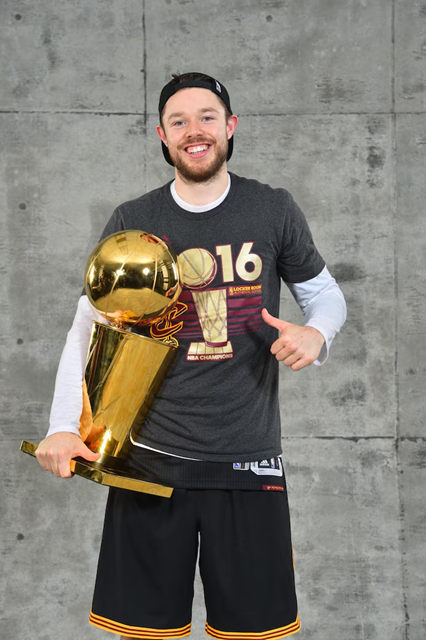
Dellavedova’s rise had been unlikely from the start. After going undrafted in 2013 out of Saint Mary’s, he earned a roster spot with the Cleveland Cavaliers and quickly became known for his defence, toughness, passing and willingness to do whatever was needed alongside LeBron James, Kyrie Irving and Kevin Love.
His biggest NBA achievement came one year after that gruelling 2015 Finals run. In 2016, Dellavedova was part of the Cleveland team that came back from 3–1 down against Golden State to win the franchise’s first NBA championship, becoming one of the few Australians to win an NBA title.
Dellavedova went on to play 479 NBA regular-season games across Cleveland, Milwaukee and Sacramento. His best statistical NBA season came with Milwaukee in 2016–17, when he averaged 7.6 points and 4.7 assists, while his best passing game came back with Cleveland in 2020 when he delivered a career-high 14 assists against Denver.
After returning to Australia, Dellavedova signed with Melbourne United and quickly became one of the NBL’s best organisers. In January 2022, he produced his best individual NBL game, scoring 33 points with seven three-pointers and nine assists in a win over Illawarra. That season, he earned All-NBL Second Team honours before returning briefly to the NBA with Sacramento.
Dellavedova then came back to Melbourne and helped United reach back-to-back Championship Series. Both runs ended painfully. In 2024, Melbourne lost Game 5 to the Tasmania JackJumpers, then in 2025 United again fell short, this time against the Illawarra Hawks. Despite Melbourne losing the series, Dellavedova was named Championship Series MVP after a brilliant finals campaign.
That 2025 award also produced one of the classiest moments of his career. After receiving the Larry Sengstock Medal, Dellavedova walked into the Illawarra celebrations and handed the trophy to Will Hickey, telling him it belonged to him after Hickey’s huge Game 5 performance helped the Hawks win the title.
Dellavedova’s NBL story finally came full circle after signing with the Sydney Kings. Playing under Brian Goorjian, he helped Sydney win the 2026 NBL championship, adding an Australian title to go with his NBA championship. By then, Dellavedova had built a career defined less by raw numbers and more by toughness, leadership, sacrifice and winning at every level he played.
Dellavedova’s NBA highlights include;
- Winning the 2016 NBA championship with the Cleveland Cavaliers
- Scoring 20 points in Game 3 of the 2015 NBA Finals before being hospitalised with dehydration and exhaustion
- Helping Cleveland take a 2–1 Finals lead over Golden State in 2015 while defending Stephen Curry
- A career-high 14 assists for Cleveland against Denver in 2020
- A career-best NBA season in 2016–17, averaging 7.6 points and 4.7 assists with Milwaukee
Career Statistics
| M | FG% | 3P% | FT% | REB | AST | STL | BLK | TO | PPG | |
|---|---|---|---|---|---|---|---|---|---|---|
| NBL | 108 | 41 | 34 | 82 | 3.0 | 5.4 | 0.6 | 0.1 | 2.1 | 10.2 |
| NBA | 479 | 39 | 37 | 84 | 1.7 | 3.5 | 0.5 | 0.0 | 1.3 | 5.2 |
13. Steve Blake
Steve Blake was an elite playmaker, showcasing this in 2009 when he tied an NBA record with 14 assists in a single quarter. Playing for Portland against the LA Clippers, Blake delivered all 14 assists in the opening period, putting his name alongside some of the best passers in league history.
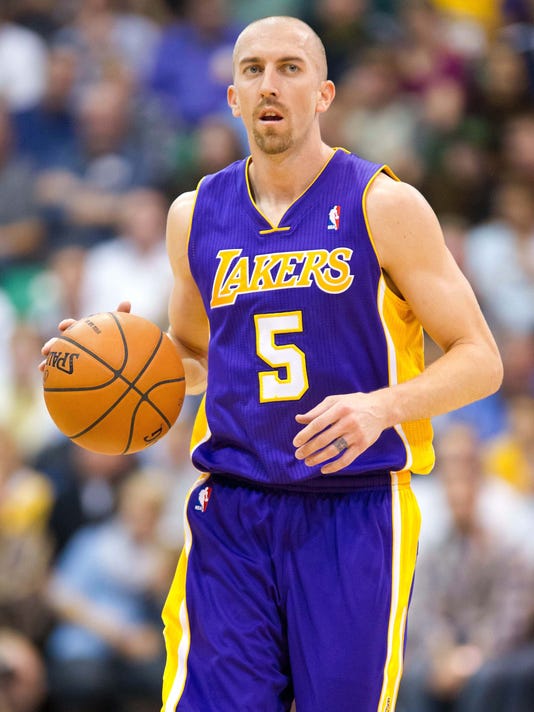
Blake entered the NBA with the Washington Wizards in 2003 after winning an NCAA championship at Maryland, and quickly established himself as a steady backup point guard. As a rookie, he averaged 5.9 points, 2.8 assists and 18.6 minutes, showing the low-mistake style that would keep him in the league for more than a decade.
His first major opportunity came in Portland, where he developed into a starter and became a key piece of the Trail Blazers’ backcourt. During the 2008–09 season, Blake averaged 11.0 points and 5.0 assists, shooting 42 percent from three while helping Portland win 54 games.
Blake’s NBA career eventually stretched across 870 regular-season games with Washington, Portland, Milwaukee, Denver, the LA Clippers, LA Lakers, Golden State and Detroit. His best statistical years came in Portland, but he is also well remembered for his time with the Lakers, where he played as a reliable backup guard alongside Kobe Bryant, Pau Gasol, Andrew Bynum and Metta World Peace.
His biggest Lakers moment came in the 2012 playoffs, when he scored 19 points and hit five three-pointers in Game 7 against Denver to help Los Angeles advance past the Nuggets. Blake was never a star, but he was trusted in big games because he protected the ball, spaced the floor and understood how to run an offence.
Blake’s NBL stint came after his final NBA season with Detroit. He joined the Sydney Kings during the 2016–17 season as a mid-season import replacement, arriving with one of the longest NBA resumes of any player to ever join the league. On paper, it looked like a major signing for Sydney.
The reality was very different. Blake never found his rhythm in Australia, and his time with the Kings became one of the stranger NBL chapters for a former NBA veteran. He lasted only nine games, averaged 5.9 points and 2.2 assists, and the Kings continued to slide down the standings.
His short Sydney stint did little to reflect the quality of his NBA career. Blake retired soon after, finishing as a 13-season NBA guard who played nearly 900 games, made more than 1,000 three-pointers and built a reputation as one of the league’s most dependable role-playing point guards.
Blake’s NBA highlights include;
- Tying an NBA record with 14 assists in the first quarter against the LA Clippers in 2009
- A career-best 18 assists against Minnesota in 2007
- Recording a triple-double with 11 points, 10 rebounds and 15 assists against Cleveland in 2014
- Scoring 19 points with five three-pointers in Game 7 of the 2012 playoffs against Denver
- Playing 870 NBA regular-season games across eight teams
Career Statistics
| M | FG% | 3P% | FT% | REB | AST | STL | BLK | TO | PPG | |
|---|---|---|---|---|---|---|---|---|---|---|
| NBL | 9 | 31 | 29 | 100 | 2.3 | 2.2 | 0.3 | 0.1 | 1.2 | 5.9 |
| NBA | 870 | 40 | 38 | 78 | 2.1 | 4.0 | 0.7 | 0.1 | 1.4 | 6.5 |
12. Josh Giddey
Josh Giddey’s professional career started in the NBL, where he became one of the clearest success stories of the league’s Next Stars pathway. As an 18-year-old with the Adelaide 36ers in 2020–21, Giddey averaged 10.9 points, 7.4 rebounds and 7.5 assists, led the NBL in assists and became the youngest Australian in league history to record a triple-double.
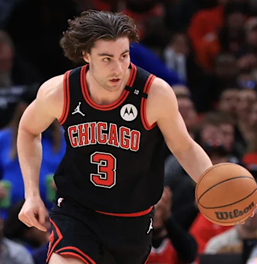
Giddey’s NBL season was built around his size, passing and feel for the game. He recorded three triple-doubles across 28 games, won the NBL Rookie of the Year award and turned Adelaide into one of the most watched teams in the competition, even though the 36ers missed the playoffs.
His most important NBL stretch came late in the season, when his triple-doubles against New Zealand, Brisbane and Sydney confirmed him as a lottery-level NBA prospect. That season gave NBA teams a full view of a 6’8 playmaker already capable of running an offence against professionals.
Oklahoma City selected Giddey with the sixth pick in the 2021 NBA Draft, making him one of the highest-drafted players to come directly from the NBL. He joined a young Thunder core built around Shai Gilgeous-Alexander and quickly became one of the league’s most productive rookie playmakers.
Giddey’s biggest early NBA moment came on 2 January 2022, when he recorded 17 points, 14 assists and 13 rebounds against Dallas to become the youngest player in NBA history to post a triple-double. He went on to win four straight Western Conference Rookie of the Month awards and finished his rookie season averaging 12.5 points, 7.8 rebounds and 6.4 assists.
His best Oklahoma City season came in 2022–23, when he averaged 16.6 points, 7.9 rebounds and 6.2 assists while helping the Thunder move from rebuilding project into one of the league’s most exciting young teams. He also joined a rare group of players to record at least 1,000 points, 700 rebounds and 500 assists within their first 100 NBA games.
After three seasons in Oklahoma City, Giddey was traded to the Chicago Bulls in 2024 in a deal that sent Alex Caruso to the Thunder. The move gave him a larger on-ball role, and he responded with a strong first season in Chicago, averaging 14.6 points, 8.1 rebounds and 7.2 assists in 2024–25 before signing a four-year, $100 million deal with the Bulls.
Giddey’s best season so far came in 2025–26, when he averaged 17.0 points, 8.3 rebounds and 9.1 assists for Chicago and recorded 13 triple-doubles. By that stage, he had gone from NBL Next Star to one of the NBA’s most productive oversized playmakers, with his rebounding, passing and triple-double production making him one of the most statistically unique Australians to ever play in the league.
Giddey’s NBA highlights include;
- Becoming the youngest player in NBA history to record a triple-double, with 17 points, 14 assists and 13 rebounds against Dallas in 2022
- Winning four straight Western Conference Rookie of the Month awards with Oklahoma City
- Averaging 16.6 points, 7.9 rebounds and 6.2 assists during the 2022–23 NBA season
- Signing a four-year, $100 million deal with the Chicago Bulls in 2025
- Averaging 17.0 points, 8.3 rebounds and 9.1 assists with Chicago in 2025–26
Career Statistics
| M | FG% | 3P% | FT% | REB | AST | STL | BLK | TO | PPG | |
|---|---|---|---|---|---|---|---|---|---|---|
| NBL | 28 | 43 | 29 | 69 | 7.4 | 7.5 | 1.1 | 0.5 | 3.4 | 10.9 |
| NBA | 334 | 46 | 34 | 76 | 7.6 | 6.6 | 0.9 | 0.5 | 2.7 | 14.6 |
11. Joe Ingles
Joe Ingles’ professional career started in the NBL, where he became the face of the South Dragons almost immediately. At 18 years of age, Ingles delivered one of the best rookie seasons in league history, averaging 15.3 points, 4.9 rebounds and 3.0 assists, winning the 2007 NBL Rookie of the Year award and quickly establishing himself as one of Australia’s best young perimeter players.
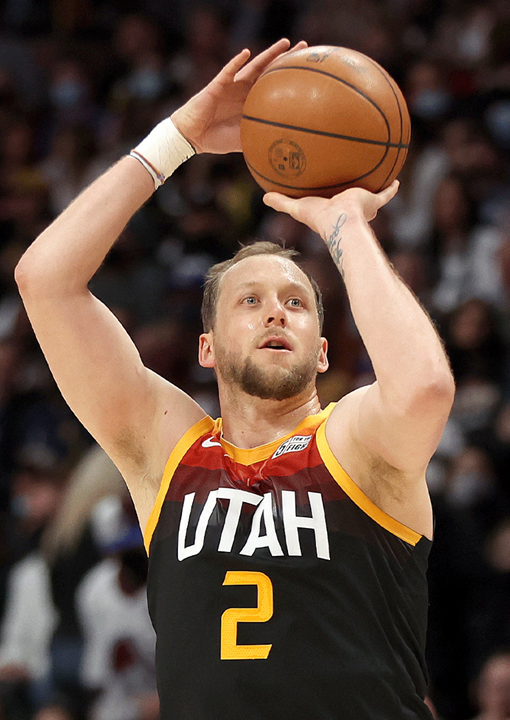
Ingles’ biggest NBL moment came in 2008–09, when he helped lead the South Dragons to the NBL championship while earning All-NBL Third Team honours. He finished his first NBL stint as a champion, a Rookie of the Year winner and one of the most talented Australian forwards in the league.
After leaving the Dragons, Ingles built his career through Europe, playing in Spain with CB Granada and FC Barcelona before joining Maccabi Tel Aviv. His time overseas included Spanish titles, a EuroLeague championship with Maccabi in 2014, and the international experience that eventually opened the door to the NBA.
Ingles reached the NBA with the Utah Jazz in 2014 and became one of the league’s great undrafted success stories. What began as a low-usage role quickly turned into a long-term spot in Utah’s rotation, where his shooting, passing and basketball IQ made him one of the most valuable role players on a team built around Gordon Hayward, Rudy Gobert and later Donovan Mitchell.
His best NBA stretch came with Utah, where he became a full-time starter after Hayward left for Boston and developed into one of the league’s most reliable three-point shooters. In 2018–19, Ingles averaged a career-best 12.1 points, 5.7 assists and 4.0 rebounds across all 82 games, while also becoming the Jazz’s all-time leader in three-pointers made.
Ingles also delivered several high-profile playoff moments with Utah. During the 2018 playoffs, he helped the Jazz defeat Oklahoma City in the first round, highlighted by a 27-point Game 3 performance where he made five three-pointers and helped Utah take control of the series against a Thunder team featuring Russell Westbrook, Paul George and Carmelo Anthony.
After tearing his ACL in January 2022, Ingles was traded to Portland but did not play for the Trail Blazers. He returned from the injury with Milwaukee in 2022–23, then spent the 2023–24 season with Orlando before joining Minnesota in 2024. With the Timberwolves, Ingles moved into a veteran leadership role, providing shooting, experience and locker-room presence on a playoff team.
Ingles’ final NBA seasons were quieter statistically, but still included one of the most memorable personal moments of his career. In March 2025, Minnesota started him against New Orleans so his son Jacob, who has autism, could watch him play in person. A year later, in Minnesota’s final regular-season game of 2025–26, Ingles showed he still had something left, recording 15 points, 10 assists and 6 rebounds against the Pelicans.
After his season with Minnesota, Ingles is expected to return to the NBL, with reports linking him to Melbourne United for the 2026–27 season. If finalised, it would bring his career full circle, returning him to the league where he first emerged as a teenage star nearly two decades earlier.
Ingles’ NBA highlights include;
- Becoming the Utah Jazz all-time leader in three-pointers made
- A career-high 34 points against Washington in 2021, tying a Jazz franchise record with eight made three-pointers
- 27 points and five three-pointers in Game 3 of Utah’s 2018 playoff series against Oklahoma City
- A career-high 14 assists against the Lakers in 2019, later matching that mark again in 2021
- 15 points, 10 assists and 6 rebounds for Minnesota in the final game of the 2025–26 regular season
Career Statistics
| M | FG% | 3P% | FT% | REB | AST | STL | BLK | TO | PPG | |
|---|---|---|---|---|---|---|---|---|---|---|
| NBL | 102 | 45 | 36 | 75 | 5.0 | 3.7 | 1.0 | 0.6 | 2.7 | 14.5 |
| NBA | 750 | 45 | 41 | 78 | 3.0 | 3.5 | 0.8 | 0.1 | 1.4 | 7.7 |
10. Patty Mills
Patty Mills’ professional career started in the NBA, but his rare NBL stop came during the 2011 lockout, when Australian fans briefly got to watch a genuine NBA-level guard return home. With his Portland contract finished and the NBA season delayed, Mills signed with the Melbourne Tigers and immediately became one of the league’s biggest drawcards.
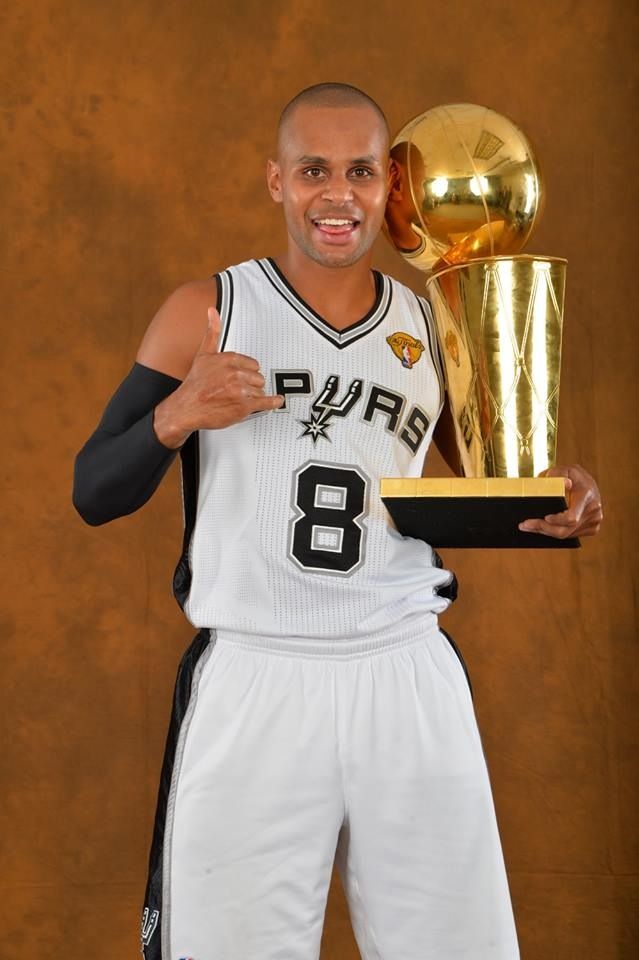
Mills played only nine games for Melbourne, but his impact was immediate, averaging 18.6 points, 5.0 assists and 2.3 rebounds while giving the NBL one of its most high-profile Australian cameos. He then left for a lucrative contract in China with Xinjiang before the next chapter of his NBA career opened.
That chapter came with San Antonio. Mills signed with the Spurs in 2012 and gradually became one of the league’s best bench shooters, fitting perfectly into a veteran group built around Tim Duncan, Tony Parker, Manu Ginobili and Kawhi Leonard.
Mills’ defining NBA moment came in the 2014 Finals against Miami. In Game 5, he scored 17 points in just 17 minutes, including 14 in the third quarter, as the Spurs finished off the Heat and won the NBA championship. That performance remains one of the greatest Finals moments by an Australian player.
His best individual NBA season came in 2013–14, when he averaged 10.2 points in 81 games while shooting 42.5 percent from three. He later remained a crucial part of the Spurs’ rotation for years, then re-signed in 2017 on a four-year, $50 million deal as the franchise transitioned away from its championship core.
After leaving San Antonio, Mills continued his NBA career with Brooklyn, Atlanta, Miami, Utah and the LA Clippers. His Brooklyn debut was one of the best shooting nights of his career, as he hit seven three-pointers against Milwaukee, then became the first player in NBA history to make 10 threes without a miss across the first two games of a season.
Mills reached another major milestone late in his NBA career, becoming the first Australian to play 1,000 NBA games. By then, he had built one of the longest and most decorated NBA careers by any Australian guard, with a championship, more than 900 regular-season appearances and a national-record playoff resume.
After going unsigned in the NBA, Mills continued his career in Spain with La Laguna Tenerife in 2026, playing in Liga ACB and the Basketball Champions League. Early in that stint, he showed he could still score at a high level, leading Tenerife in points per game after his first handful of appearances.
Mills is now expected to return to the NBL for the 2026–27 season, with Andrew Gaze reporting that he is set to join the Brisbane Bullets. If finalised, it would be his second NBL stint and a full-circle return to Australian basketball more than a decade after his brief lockout run with Melbourne.
Mills’ NBA highlights include;
- Winning the 2014 NBA championship with the San Antonio Spurs
- Scoring 17 points in 17 minutes in Game 5 of the 2014 NBA Finals against Miami
- Scoring 34 points, with 12 assists and 5 rebounds, in San Antonio’s final regular-season game of 2012
- Scoring 27 points as a starter against Steve Nash in his final game for Phoenix
- Becoming the first Australian to reach 1,000 NBA games
Career Statistics
| M | FG% | 3P% | FT% | REB | AST | STL | BLK | TO | PPG | |
|---|---|---|---|---|---|---|---|---|---|---|
| NBL | 9 | 42 | 35 | 81 | 2.3 | 5.0 | 0.8 | 0.1 | 2.4 | 18.6 |
| NBA | 921 | 42 | 39 | 86 | 1.6 | 2.2 | 0.6 | 0.1 | 1.0 | 8.7 |
9. Josh Childress
Josh Childress made an immediate impact in the NBA, arriving as the sixth pick in the 2004 NBA Draft and quickly becoming one of Atlanta’s most productive young players. As a rookie with the Hawks, he averaged 10.1 points, 6.0 rebounds and 1.9 assists, finishing the season on the NBA All-Rookie Second Team.
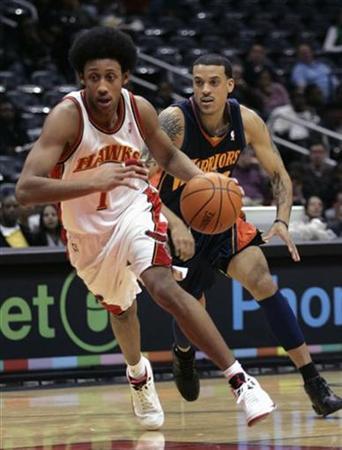
Childress settled into a valuable sixth-man role in Atlanta, playing alongside Joe Johnson, Josh Smith, Al Horford and Marvin Williams as the Hawks began building towards the playoffs. Across four seasons with Atlanta, he averaged 11.1 points and 5.6 rebounds over 285 games, including 67 starts.
His best individual NBA season came in 2007–08, when he averaged 11.8 points and 4.9 rebounds while shooting 57 percent from the field. That year, Childress played a key bench role as Atlanta pushed the eventual champion Boston Celtics to seven games in the first round of the playoffs.
Childress’ career then took one of the most unusual turns of any NBA player on this list. When his rookie contract expired, Atlanta offered him a five-year, $33 million deal, but Childress instead signed a three-year, $20 million contract with Greek powerhouse Olympiacos. Due to European tax advantages, the deal was widely viewed as comparable to far more NBA money and made him one of the highest-profile American players to leave the NBA in his prime.
In Greece, Childress helped Olympiacos become one of Europe’s biggest clubs. He spent two seasons there, earned All-EuroLeague Second Team honours in 2010 and helped the club win the Greek Cup before returning to the NBA through a sign-and-trade to the Phoenix Suns.
Childress was never quite the same NBA player after returning. Injuries, role changes and limited minutes followed him through Phoenix, Brooklyn and New Orleans, and after playing 285 games in four seasons with Atlanta, he played only 106 regular-season games across the rest of his NBA career.
His NBL arrival in 2014 created huge attention across Australian basketball. When Childress signed with the Sydney Kings, he became one of the biggest-name imports the league had seen, and his first season showed why. Despite injuries and a suspension after an elbowing incident involving Perth’s Jesse Wagstaff, he averaged 21.1 points, 9.2 rebounds, 4.2 assists, 2.1 steals and 2.2 blocks, earning All-NBL First Team honours and finishing as the league’s top scorer.
Childress’ time with Sydney was brilliant but broken up by bad luck. A torn pectoral muscle limited his first season, and a fractured hand ended his second season early. He later had a short G League stint with the Texas Legends, then played in Japan with San-en NeoPhoenix before returning to the NBL with Adelaide.
At 34 years of age, Childress became a crucial piece for the 2017–18 Adelaide 36ers. He played every regular-season game, averaged 12.5 points and 6.6 rebounds, and helped Adelaide reach the Grand Final series against Melbourne United. But once again, injury struck at the worst possible time, with a fractured shoulder ruling him out for the rest of the series after Game 2. Adelaide lost the series in five games.
Childress later returned to Japan with San-en NeoPhoenix before his professional career ended in 2019. His path remains one of the more fascinating NBL-NBA stories: a lottery pick, a high-level NBA sixth man, one of the first modern NBA players to leave for Europe in his prime, and later one of the most talented imports to play in Australia.
Childress’ NBA highlights include;
- Being named to the NBA All-Rookie Second Team in 2005
- A career-high 26 points and 8 rebounds for Atlanta against Toronto in 2008
- A 23-point game on 10-of-11 shooting for the Hawks in 2008
- A 17-point, 15-rebound double-double against Boston in 2005
- Playing a key bench role during Atlanta’s seven-game playoff series against Boston in 2008
Career Statistics
| M | FG% | 3P% | FT% | REB | AST | STL | BLK | TO | PPG | |
|---|---|---|---|---|---|---|---|---|---|---|
| NBL | 58 | 52 | 33 | 70 | 7.7 | 2.9 | 1.0 | 1.4 | 2.2 | 17.1 |
| NBA | 391 | 52 | 33 | 78 | 4.7 | 1.6 | 0.8 | 0.4 | 1.1 | 9.1 |
8. Hakim Warrick
Hakim Warrick entered the NBA as one of the most explosive athletes in the 2005 draft class. His 38-inch vertical leap, 7-foot-2 wingspan and high-flying college career at Syracuse made him impossible to ignore, and the Memphis Grizzlies selected him with the 19th pick in the 2005 NBA Draft.

Warrick appeared in 68 games as a rookie for Memphis, playing behind Pau Gasol and averaging 4.1 points and 2.1 rebounds in 10.6 minutes per game. His athleticism was already obvious, and he was selected for the 2006 NBA Slam Dunk Contest, where he finished third behind Nate Robinson and Andre Iguodala.
His best opportunity came the following season, when Gasol missed time with a broken foot. Warrick moved into a larger role and delivered the most productive season of his NBA career, averaging 12.7 points and 5.1 rebounds while becoming a regular part of the Grizzlies’ rotation.
Warrick stayed productive in Memphis, consistently giving the Grizzlies double-figure scoring and athletic frontcourt minutes. His best individual performance with the team came in 2007, when he recorded 22 points and a career-high 16 rebounds against Phoenix.
After leaving Memphis, Warrick moved through several NBA stops, including Milwaukee, Chicago, Phoenix, New Orleans and Charlotte. His most notable post-Memphis run came with the Phoenix Suns, where he played 80 games in 2010–11 and averaged 8.4 points and 3.7 rebounds in a frontcourt that still allowed him to showcase his finishing and transition game.
His career-high scoring night also came with Phoenix, when he scored 32 points with 8 rebounds and 4 assists against Houston in 2011. That performance was a reminder of the talent that made him a first-round pick, even as his NBA role became more inconsistent across the second half of his career.
After his NBA career slowed, Warrick continued overseas with stops in Asia before arriving in Australia for the 2015–16 NBL season. Melbourne United brought him in as an athletic frontcourt weapon, and he became one of the league’s best bench scorers despite an interrupted season.
Warrick helped Melbourne start the season 5–0 before a groin injury sidelined him. He returned later in the season and still finished the year averaging 14.2 points and 6.0 rebounds, earning the NBL’s Best Sixth Man award as United claimed the minor premiership.
Melbourne’s season ended in disappointment when the fourth-seeded New Zealand Breakers swept United 2–0 in the semi-finals. Warrick’s NBL stay was only one season, but it gave the league a former NBA lottery-level athlete who still had enough explosiveness and scoring touch to influence games at 33 years of age.
Warrick’s NBA highlights include;
- A third-place finish in the 2006 NBA Slam Dunk Contest
- Scoring 11 points against Dallas Mavericks legend Dirk Nowitzki in the 2006 NBA playoffs
- A career-high 32 points, 8 rebounds and 4 assists against Houston in 2011
- Recording 22 points and a career-high 16 rebounds against Phoenix in 2007
- A 15-point, 14-rebound double-double for Phoenix against Dallas in 2010
Career Statistics
| M | FG% | 3P% | FT% | REB | AST | STL | BLK | TO | PPG | |
|---|---|---|---|---|---|---|---|---|---|---|
| NBL | 23 | 50 | 17 | 65 | 6.0 | 0.8 | 0.5 | 0.7 | 1.2 | 14.2 |
| NBA | 526 | 49 | 19 | 73 | 4.0 | 0.8 | 0.4 | 0.3 | 1.8 | 9.4 |
7. Al Harrington
Al Harrington’s NBL stint came late, but his NBA résumé was one of the strongest ever brought into the league. In 2015, the Sydney Kings needed an injury replacement after Josh Childress fractured his right hand, and Harrington arrived as a 16-season NBA veteran with nearly 1,000 games of experience.

Harrington suited up for only six games with Sydney, but his class was obvious. He averaged 17.7 points, 6.8 rebounds and 2.7 assists, giving the Kings immediate scoring, size and experience during a season that had already been disrupted by injuries.
His NBL stay was short, but the signing was significant. Harrington was one of the few players to spend more than 15 seasons in the NBA after jumping straight from high school, joining a rare group that included Kevin Garnett, Kobe Bryant, Jermaine O’Neal and Rashard Lewis.
Harrington entered the NBA as an 18-year-old with the Indiana Pacers and needed time before finding his place. By his fourth season, he had become a key part of Indiana’s rotation, averaging 13.1 points and 6.3 rebounds in 2001–02 before moving into the starting lineup the following year.
His best early NBA stretch came with the Pacers, where he became one of the league’s top bench forwards. In 2003–04, Harrington averaged 13.3 points and 6.4 rebounds, helped Indiana reach the Eastern Conference Finals and finished runner-up for the NBA Sixth Man of the Year award.
In 2004, Harrington was traded to Atlanta in a deal that sent Stephen Jackson to Indiana, creating a strange link between two of the highest-ranked NBL-to-NBA names on this list. Harrington became a bigger offensive option with the Hawks, then later played for Golden State, New York, Denver, Washington and Orlando.
His most famous team moment came with the Golden State Warriors in 2007, when he started for the “We Believe” team that shocked the top-seeded Dallas Mavericks in the first round of the playoffs. It remains one of the most memorable upsets in NBA playoff history, and Harrington was part of the frontcourt that helped create matchup problems for Dallas.
Harrington’s best individual scoring night came with the New York Knicks in 2009, when he poured in 42 points in 36 minutes. He later became a valuable bench scorer in Denver, including a 31-point, 9-rebound game for the Nuggets in 2012.
Harrington finished his NBA career with 981 regular-season games, averaging 13.5 points and 5.6 rebounds. His short Sydney stay did not define his career, but it gave the NBL one of the most experienced NBA veterans to ever play in Australia.
Harrington’s NBA highlights include;
- Helping the Indiana Pacers reach the 2004 Eastern Conference Finals
- Finishing runner-up for the 2004 NBA Sixth Man of the Year award
- Starting for the “We Believe” Golden State Warriors team that upset Dallas in the 2007 playoffs
- Scoring a career-high 42 points in 36 minutes with the New York Knicks in 2009
- Recording 31 points and 9 rebounds off the bench for Denver in 2012
Career Statistics
| M | FG% | 3P% | FT% | REB | AST | STL | BLK | TO | PPG | |
|---|---|---|---|---|---|---|---|---|---|---|
| NBL | 6 | 51 | 33 | 81 | 6.8 | 2.7 | 0.5 | 0.0 | 2.7 | 17.7 |
| NBA | 981 | 44 | 35 | 73 | 5.6 | 1.7 | 0.9 | 0.3 | 1.8 | 13.5 |
6. Montrezl Harrell
Montrezl Harrell arrived in the NBL as one of the most explosive bench scorers of his NBA generation. A former NBA Sixth Man of the Year, Harrell joined the Adelaide 36ers in 2024 and immediately gave the league a player with genuine NBA production, physicality and star power.
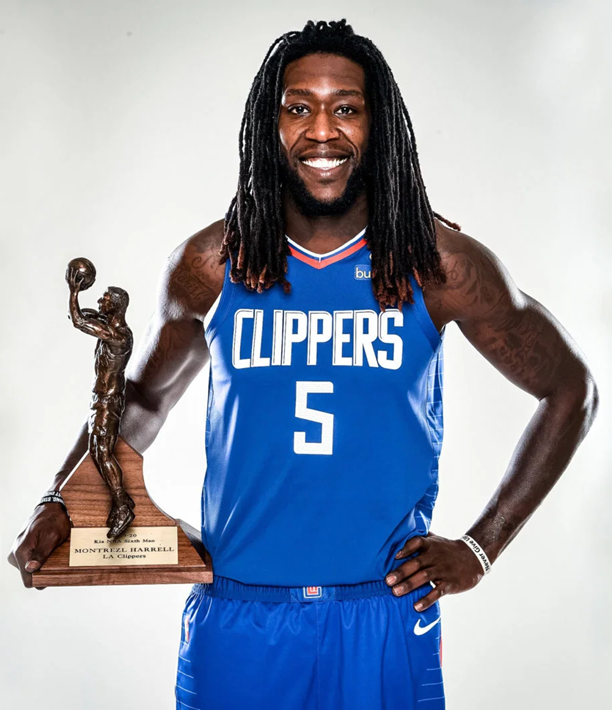
Harrell’s NBL impact was immediate. After initially arriving as an injury replacement, Adelaide moved quickly to keep him for the rest of the 2024–25 season, and he rewarded them with dominant frontcourt production. One of his biggest early performances came against Cairns, when he delivered 36 points, 16 rebounds and 5 blocks in an overtime win.
That season, Harrell averaged 20.5 points, 9.3 rebounds, 2.0 assists and 1.1 blocks across 28 games, earning All-NBL Second Team honours and becoming one of the most difficult interior matchups in the competition.
Harrell’s Adelaide season also included controversy. In November 2024, he was suspended for three games and fined after a Melbourne United game at John Cain Arena where an on-court melee spilled into an off-court incident involving courtside spectators. The NBL tribunal upheld charges that included striking, engaging in a melee and inappropriate grabbing or handling of a spectator, while one spectator was later banned for life and another for 10 years.
Before his NBL stint, Harrell had already built a major NBA career. Drafted by Houston in the second round in 2015 after a standout college career at Louisville, he began as an energy big with the Rockets before becoming a major piece of the LA Clippers’ bench unit.
His best NBA years came with the Clippers, where his chemistry with Lou Williams made him one of the league’s most dangerous pick-and-roll finishers. In 2019–20, Harrell averaged 18.6 points and 7.1 rebounds, winning the NBA Sixth Man of the Year award and beating out teammate Williams for the honour.
Harrell later played for the LA Lakers, Washington, Charlotte and Philadelphia. His best individual NBA scoring night came with the Clippers in 2019, when he scored a career-high 34 points against New Orleans. He also produced multiple high-impact playoff moments, including 25 points off the bench for the Clippers against Golden State in the 2019 playoffs.
After leaving the NBA, Harrell’s career continued across Australia, China and Puerto Rico. He later re-signed with Adelaide for the 2025–26 season, but the 36ers released him before the campaign after a positive test in China led to uncertainty around his playing status.
Harrell’s NBL stint was short, intense and eventful, but there was no doubting his ability. Between his NBA Sixth Man of the Year award, 515 NBA games and dominant Adelaide production, he owns one of the strongest NBA résumés of any player to come through the NBL.
Harrell’s NBA highlights include;
- Winning the 2019–20 NBA Sixth Man of the Year award with the LA Clippers
- A career-best NBA season in 2019–20, averaging 18.6 points and 7.1 rebounds
- A career-high 34 points for the Clippers against New Orleans in 2019
- Scoring 25 points off the bench against Golden State in the 2019 NBA playoffs
- Playing 515 NBA regular-season games across Houston, the LA Clippers, LA Lakers, Washington, Charlotte and Philadelphia
Career Statistics
| M | FG% | 3P% | FT% | REB | AST | STL | BLK | TO | PPG | |
|---|---|---|---|---|---|---|---|---|---|---|
| NBL | 28 | 58 | 27 | 67 | 9.3 | 2.0 | 0.7 | 1.1 | 2.3 | 20.5 |
| NBA | 515 | 62 | 11 | 66 | 5.0 | 1.3 | 0.5 | 0.8 | 1.1 | 12.1 |
5. JaVale McGee
JaVale McGee’s NBA career began with Washington, where his length, athleticism and shot-blocking made him one of the league’s most eye-catching young centres. The Wizards selected him with the 18th pick in the 2008 NBA Draft, and by his third season he had already produced one of the strangest statistical nights of the era, recording 11 points, 12 rebounds and 12 blocks against Chicago in 2011.
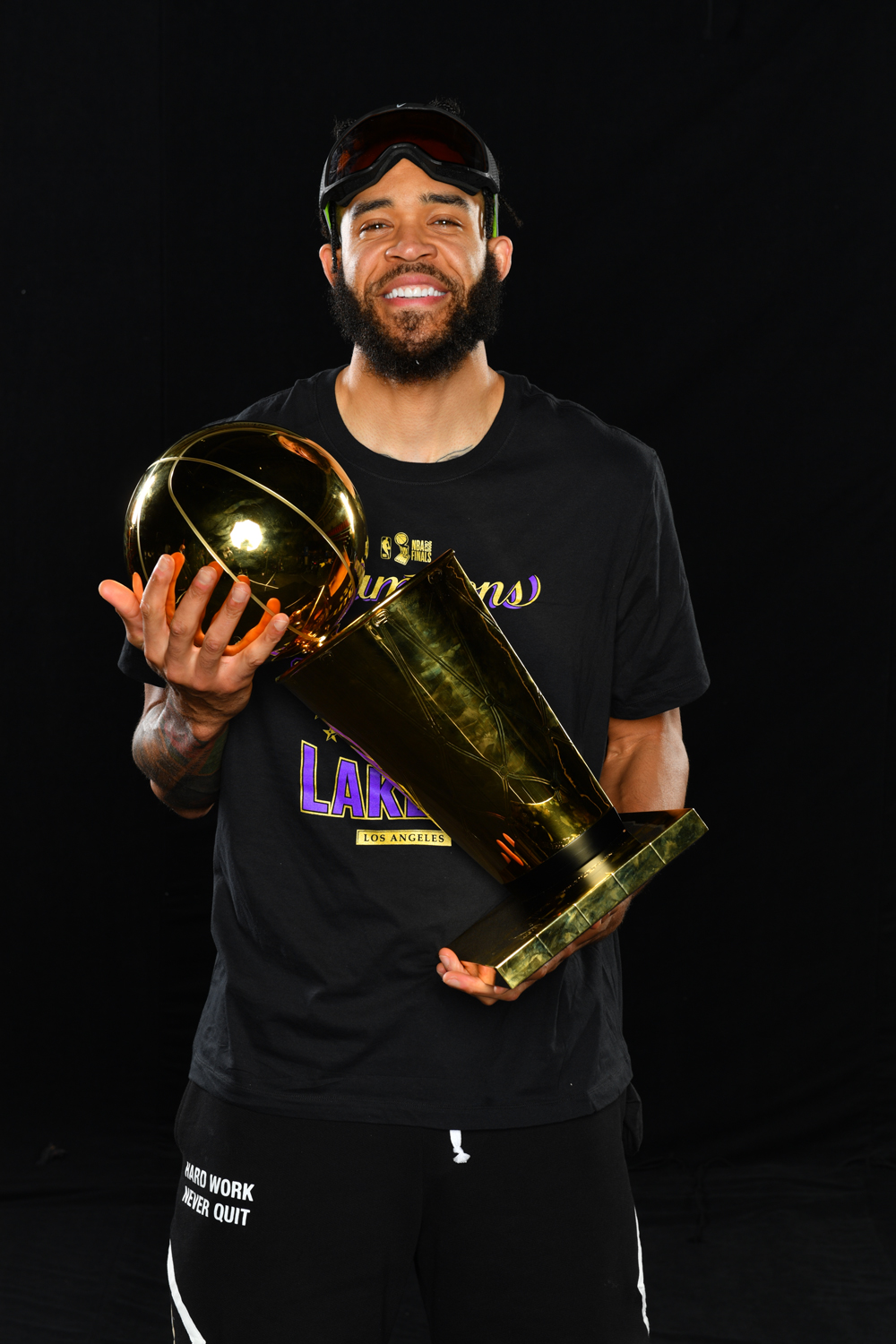
That same season, McGee became one of the most memorable names in the 2011 NBA Slam Dunk Contest. He finished second to Blake Griffin, but his three-ball dunk with John Wall became a Guinness World Record for the most basketballs dunked in a single jump.
McGee’s early career was defined by highlight plays, blocked shots and raw athleticism, but his career took on a different shape later when he found the right role on championship teams. After stints with Washington, Denver, Philadelphia and Dallas, he revived his NBA career with Golden State.
Playing alongside Stephen Curry, Kevin Durant, Klay Thompson and Draymond Green, McGee became a valuable energy centre for the Warriors. He gave Golden State vertical spacing, rim protection and efficient finishing, helping the Warriors win back-to-back NBA championships in 2017 and 2018.
McGee then added a third championship with the Los Angeles Lakers in 2020. As part of a team built around LeBron James and Anthony Davis, he started 68 regular-season games and gave the Lakers size and rim protection before they went on to win the title inside the Orlando bubble.
His best individual NBA performance came with the Lakers in March 2019, when he produced a career-high 33 points, 20 rebounds and 6 blocks against Brooklyn. It was the type of stat line that showed why, even deep into his career, McGee remained one of the league’s most productive per-minute big men.
McGee also added an Olympic gold medal with Team USA at the Tokyo Games, giving him one of the more decorated resumes on this list. Between his NBA titles, Olympic medal and long NBA career, he became far more than a highlight-reel big man.
After his final NBA stops with Phoenix, Dallas and Sacramento, McGee continued overseas. In 2025, he played in Puerto Rico with Vaqueros de Bayamón, helping the club win the BSN championship and earning Defensive Player of the Year honours before signing with the Illawarra Hawks for NBL26.
McGee made an immediate impact in Australia. In his NBL debut, he delivered 32 points and 13 rebounds against Tasmania, then later exploded for 37 points and 14 rebounds in a win over Melbourne United. Across 31 games with Illawarra, he averaged 19.3 points, 10.0 rebounds, 2.1 assists and 1.8 blocks, winning the Hawks’ club MVP award before continuing his career with the Beijing Ducks in China.
McGee’s NBA highlights include;
- Winning three NBA championships, two with Golden State and one with the LA Lakers
- Winning an Olympic gold medal with Team USA at the Tokyo Games
- A career-high 33 points, 20 rebounds and 6 blocks for the Lakers against Brooklyn in 2019
- Recording 11 points, 12 rebounds and 12 blocks for Washington against Chicago in 2011
- Finishing second in the 2011 NBA Slam Dunk Contest while setting a Guinness World Record for dunking three basketballs in one jump
Career Statistics
| M | FG% | 3P% | FT% | REB | AST | STL | BLK | TO | PPG | |
|---|---|---|---|---|---|---|---|---|---|---|
| NBL | 31 | 56 | 0 | 74 | 10.0 | 2.1 | 0.9 | 1.8 | 2.4 | 19.3 |
| NBA | 909 | 58 | 19 | 60 | 5.0 | 0.4 | 0.4 | 1.4 | 1.0 | 7.6 |
4. LaMelo Ball
LaMelo Ball’s NBL season changed the way the basketball world looked at Australia’s Next Stars pathway. When he signed with the Illawarra Hawks in 2019, he arrived as one of the most talked-about teenage prospects in the world, but there were still questions about how his game would translate against grown professionals.
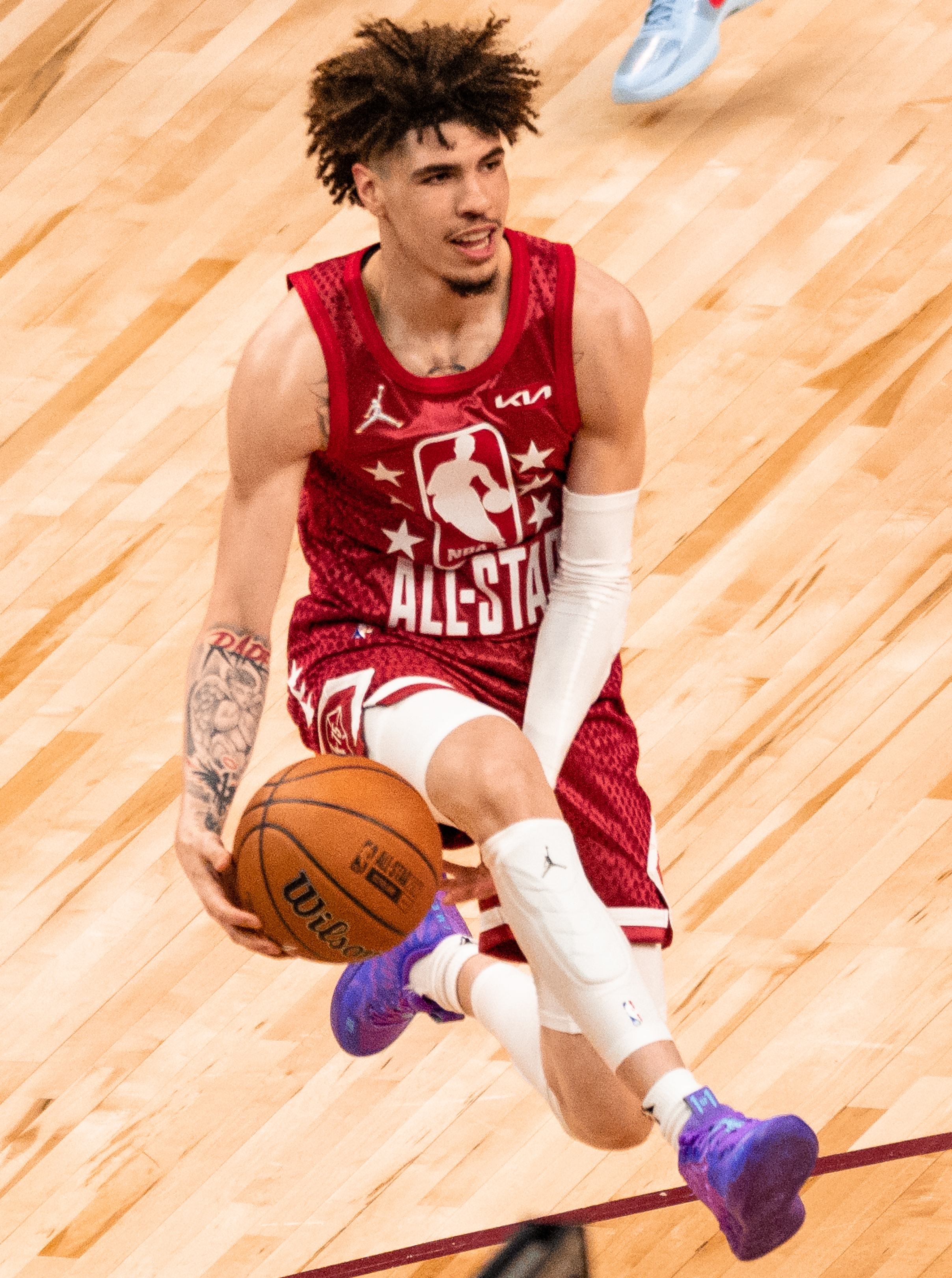
Ball answered those questions quickly. In his NBL debut against Brisbane, he recorded 12 points, 10 rebounds and 5 assists, showing the size, passing vision and confidence that would make him one of the league’s biggest drawcards.
His best stretch came before a foot injury ended his season. Across 12 games with Illawarra, Ball averaged 17.0 points, 7.6 rebounds and 6.9 assists, earning the NBL Rookie of the Year award and turning himself from a debated prospect into a top-three NBA draft pick.
Charlotte selected Ball with the third pick in the 2020 NBA Draft, and he immediately became the face of the Hornets’ rebuild. As a rookie, he averaged 15.7 points, 6.1 assists and 5.9 rebounds, winning NBA Rookie of the Year and becoming one of the clearest NBL-to-NBA success stories.
His second season confirmed his star power. In 2021–22, Ball averaged 20.1 points, 7.6 assists and 6.7 rebounds, was named an NBA All-Star and helped bring real excitement back to Charlotte. His combination of deep shooting, transition passing and flair made him one of the league’s most entertaining young guards.
Ball’s biggest individual scoring night came in November 2024, when he erupted for a career-high 50 points against Milwaukee. That season was also his best scoring year, as he averaged 25.2 points, 7.4 assists and 4.9 rebounds across 47 games before ankle and wrist issues ended his campaign early.
Injuries have been the main issue across Ball’s NBA career. He has already produced All-Star-level numbers, triple-doubles and franchise-level highlights, but ankle problems and other setbacks have limited his availability and slowed Charlotte’s climb in the Eastern Conference.
Ball returned strongly in 2025–26, averaging 20.1 points, 7.1 assists and 4.8 rebounds across 72 games while helping Charlotte reach the Play-In Tournament. He also made 272 three-pointers that season, finishing just behind teammate Kon Knueppel for the team lead and showing again why his ceiling remains among the highest of any player to come through the NBL.
Ball’s NBA highlights include;
- Winning the 2020–21 NBA Rookie of the Year award with Charlotte
- Being named an NBA All-Star in 2022
- Scoring a career-high 50 points against Milwaukee in 2024
- Averaging 25.2 points, 7.4 assists and 4.9 rebounds during the 2024–25 NBA season
- Recording 38 points, 13 rebounds and 13 assists against Washington in 2025
Career Statistics
| M | FG% | 3P% | FT% | REB | AST | STL | BLK | TO | PPG | |
|---|---|---|---|---|---|---|---|---|---|---|
| NBL | 12 | 38 | 25 | 72 | 7.6 | 6.9 | 1.7 | 0.2 | 2.5 | 17.0 |
| NBA | 303 | 42 | 37 | 85 | 5.7 | 7.3 | 1.4 | 0.3 | 3.2 | 20.8 |
3. Luc Longley
Luc Longley remains one of the most important Australian basketball figures ever, becoming the first Australian to play in the NBA and later the first to win an NBA championship. His NBL connection is unusual, with the league recording him as having played two games for the Perth Wildcats in 1986, although Longley himself has said those appearances were pre-season games.
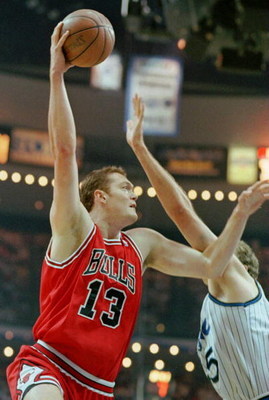
Even with that slight conjecture, Longley’s place on this list is impossible to ignore. After leaving Australia, he played college basketball at New Mexico before being selected seventh overall by the Minnesota Timberwolves in the 1991 NBA Draft, making him one of the earliest Australian players to break through as a genuine NBA prospect.
Longley’s NBA career changed forever when he joined the Chicago Bulls. Playing alongside Michael Jordan, Scottie Pippen, Dennis Rodman, Toni Kukoc and Ron Harper, he became the starting centre on one of the greatest teams in basketball history.
Longley won three consecutive NBA championships with Chicago from 1996 to 1998, giving him a résumé no other Australian centre has matched. His role was never about huge scoring numbers, but his size, passing, screening and ability to function inside the triangle offence made him a key part of the Bulls’ second three-peat.
His best NBA season came in 1997–98, when he averaged career highs of 11.4 points, 5.9 rebounds and 2.8 assists while helping Chicago complete its final championship run. That season remains the clearest example of Longley’s value as more than just a role player around Jordan.
Longley also delivered in the postseason. During the 1996 NBA Finals against Seattle, he scored 19 points in Game 3, helping the Bulls move within one win of another championship. Across 87 NBA playoff games, he averaged 6.6 points and 4.3 rebounds, playing meaningful minutes deep into multiple title runs.
His best individual regular-season performances included 22 points and 17 rebounds against the LA Clippers in 1997, and a 24-point, 9-rebound, 8-assist game against Milwaukee in 1998. Those games showed the full version of Longley’s skill set when he was asked to do more than screen, defend and keep the ball moving.
Longley later played for Phoenix and New York before injuries brought his NBA career to an end. While his NBL record remains brief and unusual, his wider impact on Australian basketball is enormous. Longley proved an Australian big man could start on the NBA’s biggest stage, win championships, and open doors for the generation that followed.
Longley’s NBA highlights include;
- Winning three NBA championships with the Chicago Bulls from 1996 to 1998
- Starting at centre for Chicago during the Bulls’ second three-peat
- Scoring 19 points in Game 3 of the 1996 NBA Finals against Seattle
- Recording 22 points and 17 rebounds against the LA Clippers in 1997
- Posting 24 points, 9 rebounds and 8 assists against Milwaukee in 1998
Career Statistics
| M | FG% | 3P% | FT% | REB | AST | STL | BLK | TO | PPG | |
|---|---|---|---|---|---|---|---|---|---|---|
| NBL | 2 | 50 | 0 | 0 | 1.5 | 0.5 | 0.0 | 0.0 | 0.0 | 1.0 |
| NBA | 567 | 46 | 0 | 74 | 4.9 | 1.5 | 0.5 | 1.0 | 1.7 | 7.2 |
2. Stephen Jackson
Stephen Jackson’s professional career started in the NBL, long before he became an NBA champion, playoff scorer and one of the league’s most outspoken personalities. After a difficult college path and being drafted by Phoenix in the second round of the 1997 NBA Draft, Jackson was not signed by the Suns and had to look overseas to begin his career.

That path brought him to Australia in 1998, where a 19-year-old Jackson joined the Sydney Kings. His NBL career lasted only four games before a broken leg ended his time in the Kings’ purple and gold, but it remains one of the most fascinating starting points for any player on this list.
Two years later, Jackson finally broke through in the NBA with the New Jersey Nets. As a rookie, he started 40 of his 77 games, averaged 8.2 points and 2.7 rebounds, and was selected to play in the Rookie Challenge during NBA All-Star Weekend.
Jackson’s career changed again when he joined the San Antonio Spurs. Playing alongside Tim Duncan, Tony Parker, Manu Ginobili and David Robinson, Jackson became the team’s third-leading scorer during the 2003 NBA playoffs and helped the Spurs win the NBA championship.
His biggest moment came in Game 6 of the 2003 NBA Finals against New Jersey, when he hit three fourth-quarter three-pointers to help San Antonio close out the series. That run remains the clearest example of Jackson’s ability to deliver in major playoff moments.
After winning a championship, Jackson signed with Atlanta and produced one of the best stretches of his career. Following the 2004 All-Star break, he averaged 24.0 points, 5.5 rebounds, 3.5 assists and 2.2 steals across 29 games, briefly becoming one of the NBA’s highest-scoring wings.
Jackson then moved to Indiana, where his career became tied to one of the NBA’s most infamous moments. During the 2004 Pacers-Pistons brawl, he entered the stands during the chaos and was suspended for 30 games, costing him more than $1.7 million in salary. It became a defining controversy in his career, but not the end of his impact.
His post-Indiana revival came with Golden State, where he became a major part of the “We Believe” Warriors team that upset the top-seeded Dallas Mavericks in the 2007 playoffs. Jackson averaged 22.8 points, 4.5 rebounds, 3.7 assists and 2.0 steals in that first-round series, helping create one of the biggest playoff upsets in NBA history.
By 2008, Jackson had reshaped much of his reputation, winning the NBA Community Assist Award and being named Warriors captain. He later played for Charlotte, Milwaukee, San Antonio and the LA Clippers, finishing with 849 NBA games, more than 12,000 points and a career built on scoring, toughness and big-game confidence.
Jackson’s career was never simple, but that is part of why it stands out. He went from a four-game NBL stint and a broken leg in Sydney to an NBA championship, a central role in one of the league’s most famous playoff upsets, and a long career as one of the toughest wings of his era.
Jackson’s NBA highlights include;
- Winning the 2003 NBA championship with the San Antonio Spurs
- Scoring 17 points in the deciding Game 6 of the 2003 NBA Finals
- Averaging 24.0 points, 5.5 rebounds, 3.5 assists and 2.2 steals after the 2004 All-Star break with Atlanta
- Helping the “We Believe” Golden State Warriors upset the top-seeded Dallas Mavericks in the 2007 playoffs
- Scoring a career-high 43 points for Charlotte against Houston in 2010
Career Statistics
| M | FG% | 3P% | FT% | REB | AST | STL | BLK | TO | PPG | |
|---|---|---|---|---|---|---|---|---|---|---|
| NBL | 4 | 53 | 50 | 50 | 0.5 | 1.0 | 0.5 | 0.0 | 0.8 | 6.0 |
| NBA | 849 | 42 | 33 | 80 | 3.9 | 3.1 | 1.3 | 0.4 | 2.5 | 15.1 |
1. Andrew Bogut
Andrew Bogut earns the number one spot because he achieved almost everything possible across the NBA and NBL. He was the first Australian selected with the number one pick in the NBA Draft, an All-NBA centre, an NBA champion, an NBL MVP and one of the most influential defensive big men Australia has produced.
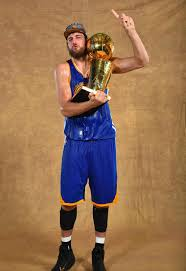
Bogut entered the NBA in 2005 when the Milwaukee Bucks selected him first overall, making him the first Australian ever drafted at number one. His rookie season was strong, as he played all 82 games, averaged 9.4 points and 7.0 rebounds, earned NBA All-Rookie First Team honours and finished third in Rookie of the Year voting.
His early years in Milwaukee showed steady growth. By 2007–08, Bogut had set career highs in points, rebounds, blocks, steals and minutes, averaging 14.3 points, 9.8 rebounds and 1.7 blocks while establishing himself as one of the league’s best young centres.
Bogut’s best NBA season came in 2009–10, when he averaged 15.9 points, 10.2 rebounds and 2.5 blocks for the Bucks. He earned All-NBA Third Team honours, becoming the first Australian to make an All-NBA team, and helped Milwaukee finish 46–36 and return to the playoffs.
That season should have been the start of his prime, but it was also where his career changed. Late in the regular season, Bogut suffered a horrific fall after a dunk, breaking his hand, dislocating his elbow and damaging his wrist. The injury ruled him out of the playoffs and robbed him of the full version of the player he was becoming.
Even after the injury, Bogut remained one of the NBA’s smartest defensive big men. He was traded to Golden State in 2012 and became a key part of the Warriors’ rise under Mark Jackson and then Steve Kerr. Playing alongside Stephen Curry, Klay Thompson, Draymond Green and Andre Iguodala, Bogut gave the Warriors rim protection, screening, passing and defensive structure.
In 2015, Bogut became an NBA champion as Golden State defeated Cleveland in the Finals. He played 67 regular-season games that year and was named to the NBA All-Defensive Second Team, underlining how important he remained to one of the league’s great modern teams.
After Golden State, Bogut had shorter NBA stints with Dallas, Cleveland and the LA Lakers before returning to Australia with the Sydney Kings for the 2018–19 NBL season. His return was one of the biggest signings in league history, and he immediately became the NBL’s best defensive anchor.
Bogut averaged 11.4 points, 11.5 rebounds, 3.4 assists and 2.7 blocks in his first season with Sydney, winning both NBL MVP and Best Defensive Player. He then returned briefly to Golden State after the NBL season, giving him one final NBA playoff run with the Warriors before finishing his playing career back with the Kings.
Bogut’s case for number one is built on both peak and achievement. Luc Longley won more NBA championships, and Stephen Jackson had the stronger scoring career, but Bogut reached a higher individual level than any other NBL-linked NBA player: number one pick, All-NBA selection, All-Defensive honours, NBA champion and NBL MVP.
Bogut’s NBA highlights include;
- Being selected first overall in the 2005 NBA Draft by the Milwaukee Bucks
- Earning All-NBA Third Team honours in 2010 after averaging 15.9 points, 10.2 rebounds and 2.5 blocks
- Winning the 2015 NBA championship with the Golden State Warriors
- Being named to the NBA All-Defensive Second Team in 2015
- Recording 12 points and 27 rebounds against Miami in 2011
- Winning NBL MVP and Best Defensive Player with the Sydney Kings in 2018–19
Career Statistics
| M | FG% | 3P% | FT% | REB | AST | STL | BLK | TO | PPG | |
|---|---|---|---|---|---|---|---|---|---|---|
| NBL | 30 | 57 | 0 | 59 | 11.5 | 3.4 | 0.5 | 2.7 | 1.9 | 11.4 |
| NBA | 706 | 53 | 12 | 56 | 8.7 | 2.2 | 0.6 | 1.5 | 0.7 | 9.6 |